
Welcome
I am Danial Sanahurskyj, a finance and economics student at Indiana University's Kelley School of Business.
In the past, I was a competitive collegiate swimmer, competing at the Division I level. Now I conduct research on how geopolitical risk is priced across asset classes and how investors react to geopolitical uncertainty. Since 2023 I have managed Bedford Capital Management, a project and legal entity through which I systematically manage capital.
- danial.sanahurskyj23@gmail.com
- linkedin.com/in/danial-sanahurskyj
- SSRN
- Author page
Research
Working papers
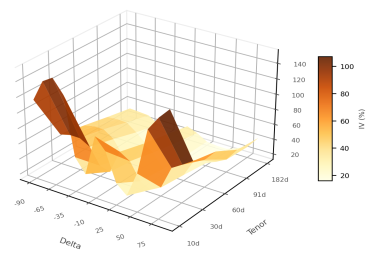
Geopolitical Risk and Cross-Asset Implied Volatility: Evidence from Equity, Oil, and Gold Options
Abstract
This paper examines how geopolitical shocks reprice risk across equity, oil, and gold options markets through both aggregate implied volatility and full volatility surface distortion. Using end-of-day options data on equities, gold, and oil and analyzing systematically identified geopolitical events through geopolitical newspaper coverage frequency, I document statistically significant but structurally distinct responses across the three asset classes. Equity volatility is uniform and risk is not priced into any specific region of the surface. Oil exhibits the most consistent surface distortion, concentrated in the deep out-of-the-money wings. Gold shows the largest response and responds more strongly to anticipated threats than realized acts. All three assets deflate after a geopolitical event consistent with the popular buy-the-rumor, sell-the-news mechanism. The most novel finding is that gold's structurally call-skewed surface intensifies sharply on event days, revealing that investors express safe-haven demand through upside call buying rather than downside put protection. Finally, shock severity above the identification threshold adds little explanatory power, consistent with geopolitical fear operating as a binary regime switch rather than a continuous variable.
Expectations of War and Peace: Evidence from Ukraine's GDP-Warrant
Abstract
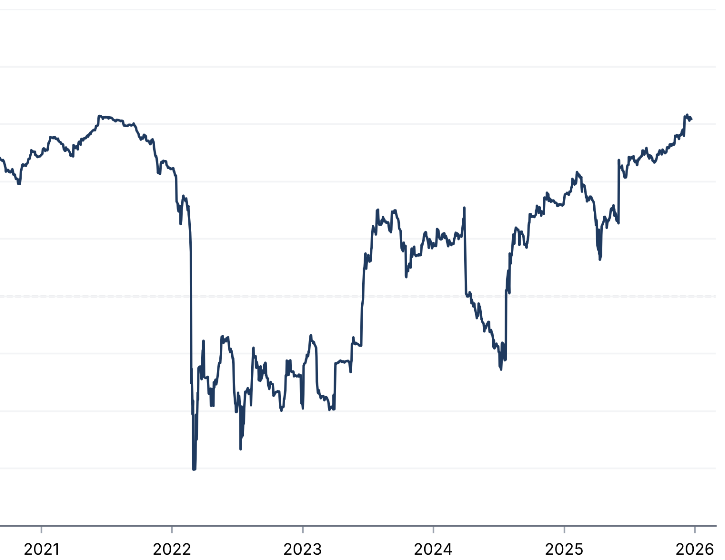
How are expectations of economic recovery formed during wartime? I study this question using Ukraine's GDP-linked warrant, a sovereign security whose payouts depend directly on the country's economic growth, together with a news-based War–Peace index built from global media coverage over 2018–2025. After Russia's 2022 invasion, the warrant's returns became largely disconnected from emerging-market and global bond conditions. I find that ordinary day-to-day changes in conflict news have little reliable effect on returns, while news shocks above an estimated threshold produce significantly larger repricing. These shocks coincide with approximately 23.8% higher conditional volatility, which decays with a half-life of about four to five trading days. The volatility response is asymmetric: escalating shocks raise volatility, while comparable de-escalation shocks do not. The results suggest that during conflict, expectations of recovery are revised mainly through discrete geopolitical catalysts rather than continuous news.
Bedford Capital Management
A multi-asset portfolio I founded in November 2023 and continue to manage.
Bedford Capital Management: Investment Report
Summary
A review of the portfolio's first fifteen months, from August 2024 to October 2025: performance and risk relative to the S&P 500, the strategy and investment philosophy behind it, case studies including a hedge held through the April 2025 tariff selloff, and the main lesson of the period, judging decisions by their process rather than their outcome.